



Installation over an Existing Lawn
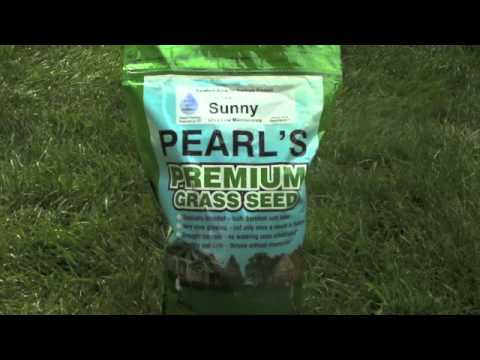
Pearl's Premium will out-compete an existing lawn if installed and maintained properly. For best result, please follow the instructions carefully, check out our Frequently-Asked Questions or contact us.
Simplified Instructions for Over-seeding Unhealthy Existing Lawns:
- Cut lawn extremely short (ideally, right down to the dirt with a dull blade)
- Rake away clippings and dislodged thatch
- Spread Pearl's Premium grass seeds according to the concentration shown on the back of the bag
- Apply an organic fertilizer or compost tea for nutrients and to promote healthy root growth
- Water in the morning and evening for one month, then (if seeded in Spring) water once a week through first summer*
- Once lawn is established, follow maintenance instructions closely
- Over-seed following season to accelerate transformation
Detailed Instructions for Over-seeding a Healthy Existing Lawn and for the Ultimate Green Lawn:
- Cut lawn/weeds as low as possible, to one inch or less, with dull blade, to help kill off existing growth.
- Apply Organic Weed Killer to Kill Established Lawn: Spray Phydura, an all-natural grass killer available from Pearl’s Premium, on the existing lawn. Be sure to follow the directions on the container. Repeat if needed; seed 3 days after final spray.
- Or, Spread 1” of Topsoil to Kill Established Lawn: A 1” deep new soil layer provides an excellent growth medium for your new lawn and will kill your old lawn by blocking sunlight. Note: this approach requires a strong back or good help.
- Steel Rake to Remove Thatch (Fall only): Steel rake deeply (or rent dethatcher for bigger lawns) to loosen old clippings, thatch and sticks. In spring, lightly rake only (do not de-thatch) to avoid bringing up weed seeds to the surface.
- Surface Rake to Remove Yard Waste (Spring only): Use flexible rake to take away loosened clippings, stones and thatch.
- Lime to Make Soil Less Acidic: Test soil to find amount of lime to bring soil into 6 - 7 pH range (or use rule of thumb of 40 pounds of pellet lime for every 1,000 sq feet of lawn). Neutral pH will encourage grass growth and discourage weed growth.
- Core Aerate by punching holes, to bring air and water to the roots and lessen compaction of the soil. For most lawns, do this once per year. For compacted/clay soil lawns or lawns that do not drain well, consider twice per year. Once you have stopped using chemical fertilizer/products and soil has rebuilt up healthy microbes, aeration may only be needed once every other year. Rent a self-propelled core aerator (not spike aerator) that pulls up finger size soil plugs onto your lawn that melt away natually. It is helpful to water the night before you aerate to moisten the lawn. Scientific evidence suggests aeration and cutting tall with a sharp blade make a measurable difference in the long term health, quality and look of the lawn. An aerated lawn favors grass and lessens weeds. A compacted lawn favors weeds!
- Add Nutrients: Spread organic starter fertilizer and seed activator, like Kick-Start, to speed germination and establishment; alternatively, add a ¼” compost layer (3/4 cubic yard) for every 1,000 sq ft. Compost helps fertilize lawn for a year and inhibit weeds and grubs. Chose organic fertilizers (N-P-K values less than 10-10-10) and compost for healthiest living environment.
- Spread seed at rate of 8 lbs per 1,000 square feet to ensure a thick lawn. Apply with a spreader going in two directions at right angles to each other for an even spread. Gently rake into soil to ensure seed adhesion to soil.
- Consider Hydroseeding: You may want to hire a professional to HYDRO-SEED if your lawn has substantial slope or your are seeding under doubtful weather conditions (e.g. early/late season frost or late spring/late summer heat). Make sure they add a tackifier (a glue like mixture) to the HYDRO-SEED mix to ensure the seeds stay in place until germination occurs.
- Roll Seeds into Dirt with an empty to 1/4-full roller (no more water than 1/4 to avoid compacting soil). Rolling seeds in for good soil contact is especially important to prevent erosion if you have any kind of slope.
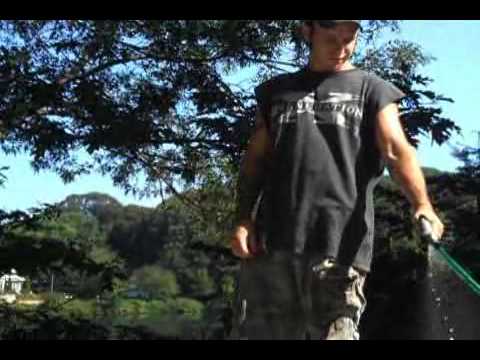
- Water every day (if it does not rain) for 3 weeks in the early morning for 20-30 minutes or whatever length of time that moistens down to one inch. Set up an automatic timer if you cannot do it regularly. In warmer weather or for well-drained soil, water a second time for 20 minutes at 2 pm. Never water after 5 pm in the evening to avoid encouraging fungal disease. After 3 weeks, cut back to watering every 2 days, for the next 2 weeks. Adjust watering for soil to stay moist but avoid puddling overnight. If you seed in the spring, supplemental watering may be required (for the first year only) during hot summer (or drought) periods. In such cases, water one inch, once per week, in the morning or more if needed in your area. If you seed in the fall, stop watering after one month. Watering to get established is essential but after that watering will actually help the weeds and old grasses more than the Pearl's Premium.
- Over-seed Next Season: Cut with sharp blade when lawn is dry; cut grass in stages, 1/3 of grass height at a time, cutting back to 1” tall; rake away clippings and over-seed at the same rate or lighter rate to better shade the soil and inhibit weeds. This second seeding (over-seeding) is very important to help out-compete weeds, cover any bald patches and correct erosion/damage and thicken the lawn. Water for the first month (same as above) when over-seeding to thicken lawn.
- Weed Control: A thick, healthy lawn, cut with a sharp blade 3+ inch tall, that is core aerated, with proper pH and ¼” of top-dressed organic compost has few weeds. But, it can take some time to get there. For the first year, expect some weeds, particularly because Pearl's Premium is slow growing and weeds grow fast! or to get rid of them. Additional aeration, cutting 3+ inches high with a sharp blade and a heavy over-seeding (8 pounds per 1,000 square feet with Pearl’s Premium) can help out compete weeds. The second year, spread corn gluten in early spring (late March or first week of April is generally a good time) to selectively prevent broadleaf weeds and do some hand pulling to control weeds that do come up. Don't over-seed for a month after applying corn gluten.
Enjoy your lush organic lawn!
Questions? See our FAQ page.
Need a Lawn Installer? Contact Us for installation
For a copy of these instructions in a printable, pdf format, click here.
*Using the USDA Hardiness Zone Map, Pearl's may need supplemental watering after established in Zones 7-10. Please note that you still should be able to cut back your watering by 75%! Zones 2-6 should water once a week deeply during drought times if possible during the first 18 months until roots are able to tap into natural water and nutrients.